

introduction
I was juggling homework, a phone call, and dinner when my youngest asked for something “soft and warm.” I needed a small win that didn’t take hours. I remembered a simple steamed egg recipe I tried once and decided to test it again. In under 20 minutes, I had a silky, comforting egg custard that felt like a hug on a plate. My kids ate it with spoonfuls of soy and a few snips of green onion. It was quick, low-fuss, and felt homemade in a way store-bought food never does. This dish fits into busy nights, picky eaters, and those small moments when you want something gentle, tasty, and quick to make.
why make this recipe
This steamed egg gives you a smooth, delicate custard that pairs with rice or stands alone as a light meal. It cooks fast and needs only a few pantry staples. For moms who want an easy, kid-friendly dish, this is perfect. The texture is silky, not rubbery, when you mix the eggs gently and steam them over low heat.
This recipe also fits well with ad-supported pages and Pinterest pins. Short steps, attractive photos, and clear tips keep readers on the page and help pins perform. It’s a simple Asian side dish that people search for: silky steamed egg, Chinese steamed egg, easy steamed egg custard, and quick steamed egg recipe all pull steady interest.
how to make Chinese Steamed Egg
Start by whisking the eggs with cool water or unsalted stock and a little salt. Strain the mix to remove bubbles and chalaza for the smoothest result. Use a wide, shallow heatproof bowl so the custard cooks evenly. Cover the bowl tightly so steam does not drip onto the surface.
Place the bowl in a steamer or on a steaming rack with gentle simmering water. Keep the heat low so the custard sets slowly. Check doneness by inserting a spoon into the center—if the liquid that comes out is clear and the custard holds its shape, it’s done. Finish with a drizzle of soy and sesame oil and fresh green onion for color and flavor.
Ingredients :
2 large egg, 1 cups water (or unsalted stock), ½ teaspoon Kosher salt, ½ tablespoon soy sauce (low sodium (more or less to your preference), ½ teaspoon toasted sesame oil, 1 stalk green onion (thinly sliced (only the green parts))
Directions :
Prepare a pot with a steaming rack and bring about ½ inch to 1 inch of water to a boil. Make sure the water line is only half way up the steaming rack. Once the water is boiling, reduce the heat o keep the water at a very gentle simmer.You can also steam using a steam basket instead. If so, the water can be at a regular simmer. Also, check out the topic “Ways to steam” in our post above for more steaming options., While waiting for the water to heat up, make the egg custard mixture by gently whisking together the egg, water or stock, and salt., Using a fine mesh strainer, strain the egg mixture into a heatproof bowl, large enough to accommodate at least 1½ cup of liquid. We recommend a bowl that is wide and shallow., Cover the bowl with cling wrap and carefully place the bowl into the steamer. Steam the egg for about 10 to 12 minutes, or until the steamed egg is set and jiggly.A fool-proof way to check if the steamed egg is cooked is to insert a spoon the middle of the egg. If the liquid that emerge is clear and the egg holds its shape, it’s done. If the steamed egg cannot hold its shape and the liquid looks murky or like beaten eggs, it is under. Keep steaming for a few more minutes., Top the steamed egg with your preferred condiments, like soy sauce, sesame oil, and chili oil if you wish. Garnish with some green onions. Enjoy while warm!
how to serve Chinese Steamed Egg
Serve warm, straight from the steamer. Spoon the custard over a bowl of hot rice for a simple meal. Drizzle a little soy sauce and toasted sesame oil on top to add salt and aroma. Sprinkle sliced green onion for color and a fresh bite. For kids, serve in small bowls with a spoon — they often love the soft texture. For adults, pair with a few simple sides like steamed greens or a small plate of pickled vegetables.
Keep the presentation simple. A shallow bowl shows the smooth surface best. If you like heat, add a few drops of chili oil or minced fresh chili for a spicy kick. The custard holds heat well, so serve it immediately for the best mouthfeel.
how to store Chinese Steamed Egg
Cool the steamed egg to room temperature before storing. Cover the bowl tightly with plastic wrap or transfer to an airtight container. Refrigerate for up to 2 days. Reheat gently in a microwave in short bursts or steam again until warm through. Avoid high heat when reheating; quick strong heat makes the custard tough and grainy. Do not freeze — freezing ruins the delicate texture.
If you plan to meal-prep, keep the sauce separate and add it right before serving to keep flavors bright.
tips to make Chinese Steamed Egg
- Use a fine mesh strainer after whisking. It removes bubbles and any stringy bits for a silky texture.
- Choose a shallow, wide bowl. The thinner layer of liquid cooks evenly and faster.
- Keep the water at a gentle simmer. High heat makes the custard firm and bumpy.
- Cover the bowl well. That prevents water droplets from falling onto the surface and keeps it smooth.
- Test with a spoon in the center. Clear liquid and a slight jiggle mean it’s done.
- Use stock instead of water for more flavor. Unsalted stock helps control salt level.
- Measure carefully. The 1:0.5 to 1:1 liquid-to-egg ratio matters for texture. For this recipe, use the given amounts.
variation (if any)
- Savory: Add finely chopped cooked shrimp or minced chicken to the bowl before steaming. Keep pieces small so they cook through in the same time.
- Mushroom: Stir in thinly sliced shiitake or enoki mushrooms for an earthy note. Lightly sauté first if you prefer less water release.
- Herb & citrus: Add a little grated ginger or a few drops of yuzu or lime on top before serving for bright flavor.
- Vegetarian umami: Use mushroom stock in place of water and add a small splash of light soy for deeper taste.
- Toppings swap: Try fried shallots, thinly sliced cucumber, or a tiny spoonful of chili crisp on top for texture.
FAQs (minimum three FAQ)
Q: How long should I steam the egg custard?
A: Steam about 10 to 12 minutes at a gentle simmer for two large eggs in a shallow bowl. Check at 10 minutes with a spoon; if the center is still cloudy, steam 1–2 minutes more.
Q: Why is my steamed egg bumpy or rubbery?
A: That often comes from too-high heat or over-whisking. Use low, steady steam and strain the mixture to remove bubbles. Cover the bowl to stop water from dripping on the surface.
Q: Can I use milk instead of water?
A: You can, but milk changes the texture and flavor. Unsalted stock gives savory depth without making the custard grainy. If you use milk, expect a slightly different mouthfeel.
Q: Can I double the recipe?
A: Yes, but use a wider container or separate bowls so the liquid layer stays thin. A very deep bowl will need longer steaming and may cook unevenly.
Q: Is it safe to eat steamed egg if the center is slightly jiggly?
A: Yes. A slightly jiggly center with clear liquid is normal and safe, as long as the liquid is not milky or raw-looking. The custard should hold its shape when you lift a spoon.
Conclusion
If you want a deeper look at technique and another chef’s detailed tips, check out Dad’s Authentic Steamed Eggs: A Chinese Chef’s Secrets for extra guidance and variations.
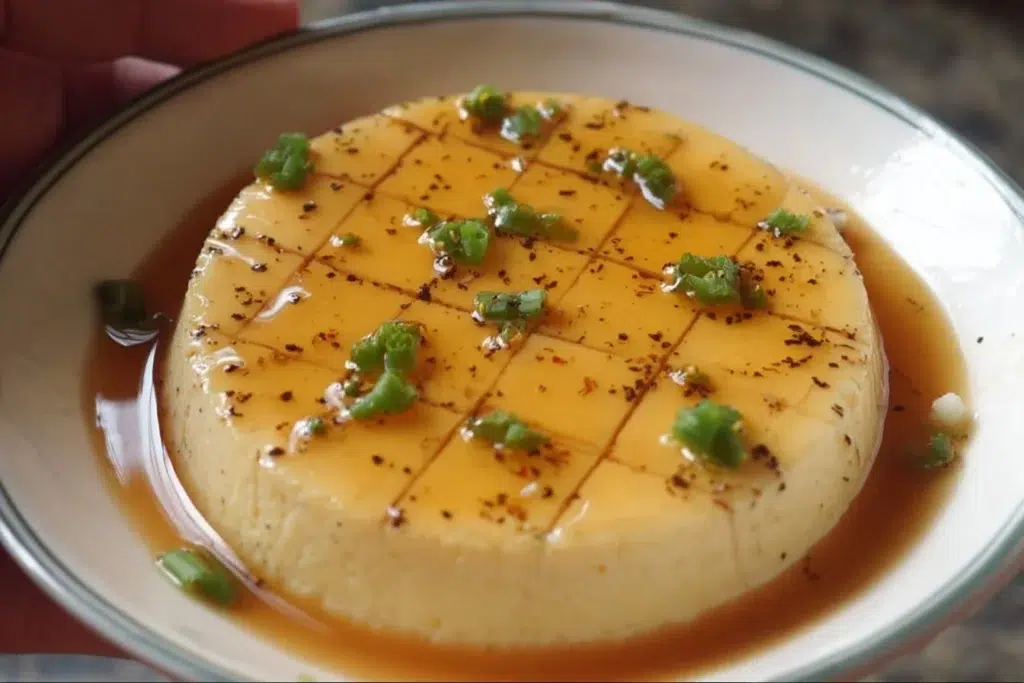
Chinese Steamed Egg
Ingredients
Method
- Prepare a pot with a steaming rack and bring about ½ inch to 1 inch of water to a boil.
- Reduce the heat to keep the water at a gentle simmer.
- In a bowl, gently whisk together the eggs, water or stock, and salt.
- Strain the egg mixture into a heatproof bowl using a fine mesh strainer to remove bubbles.
- Cover the bowl tightly with cling wrap to prevent water from dripping onto the custard.
- Place the bowl into the steamer and steam the egg for about 10 to 12 minutes.
- Check doneness by inserting a spoon into the center; it should hold its shape with clear liquid.
- Top the steamed egg with soy sauce, sesame oil, and green onions.
- Serve warm, spooned over rice or alone for a soft, gentle meal.